One Architecture.
Multiple Product Futures.
ARCA FS develops products from a shared patent-pending runtime architecture for measurable AI state, bounded continuity, authorized transitions, and reproducible evidence.
4 PRODUCT PATHS · 8 U.S. NON-PROVISIONAL APPLICATIONS · 1 PCT · 18 PROVISIONAL APPLICATIONS
Four Product Paths.
One Operational Core.
Product Portfolio
01 · OPERATIONAL CORE
ResonanceOS V4 Runtime API
LIVE CONTROLLED BETA
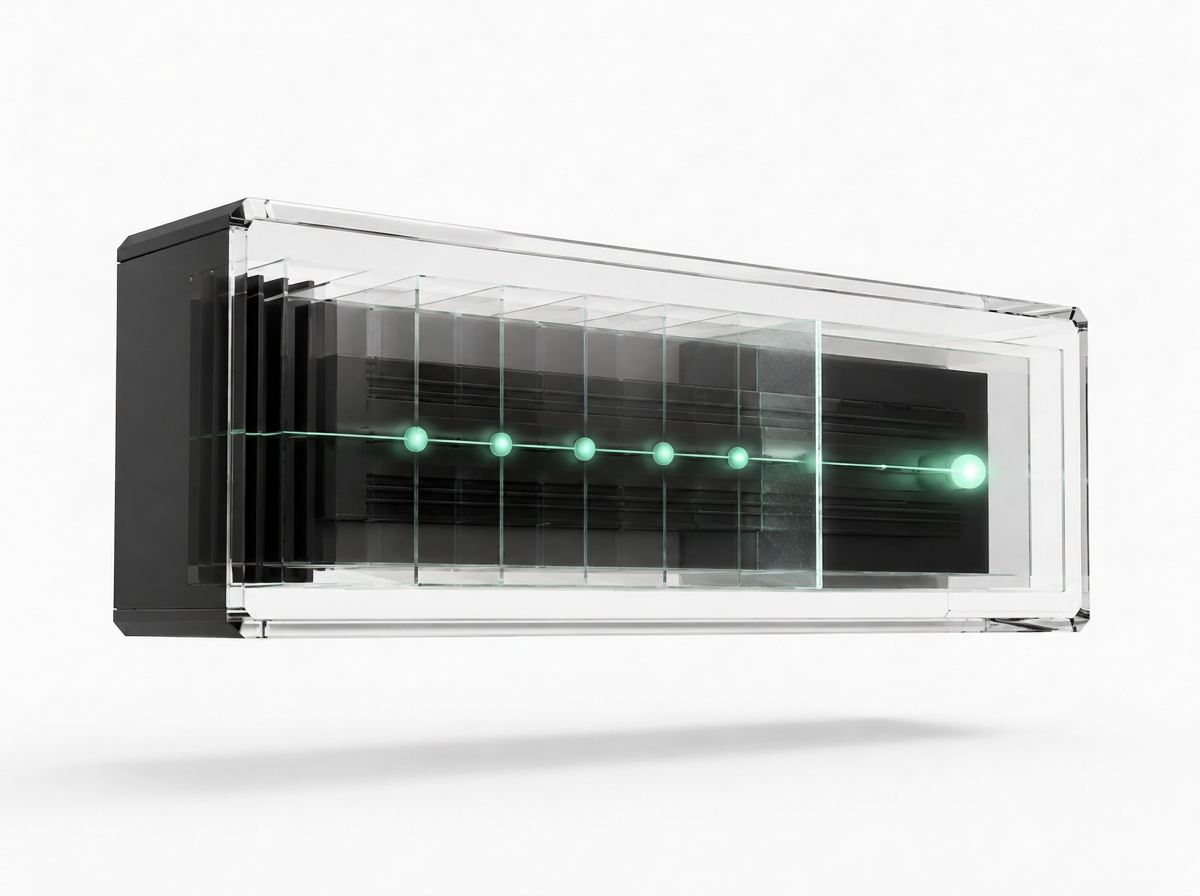
ResonanceOS V4 operates between an AI model and the application layer, converting each authenticated interaction into a bounded, versioned state transition.
Each request is projected into a structured signal, evaluated across its temporal trajectory, and checked against hysteresis-based runtime thresholds. The Sheriff Gate authorizes or rejects the proposed transition before an approved canonical state is committed.
Only the structured metadata required for continuity is carried forward. Raw inputs, model outputs, embedding vectors, and session credentials are excluded from retained state. When qualification conditions are met, selective evidence can be cryptographically referenced through SHA-256 and CID records in TRAPLOG.
Conceptual R&D visualization.
Hardware form and configuration are subject to change
02 · EMBODIED INTELLIGENCE
LIN — Resonance-Native AI
RESEARCH & DEVELOPMENT
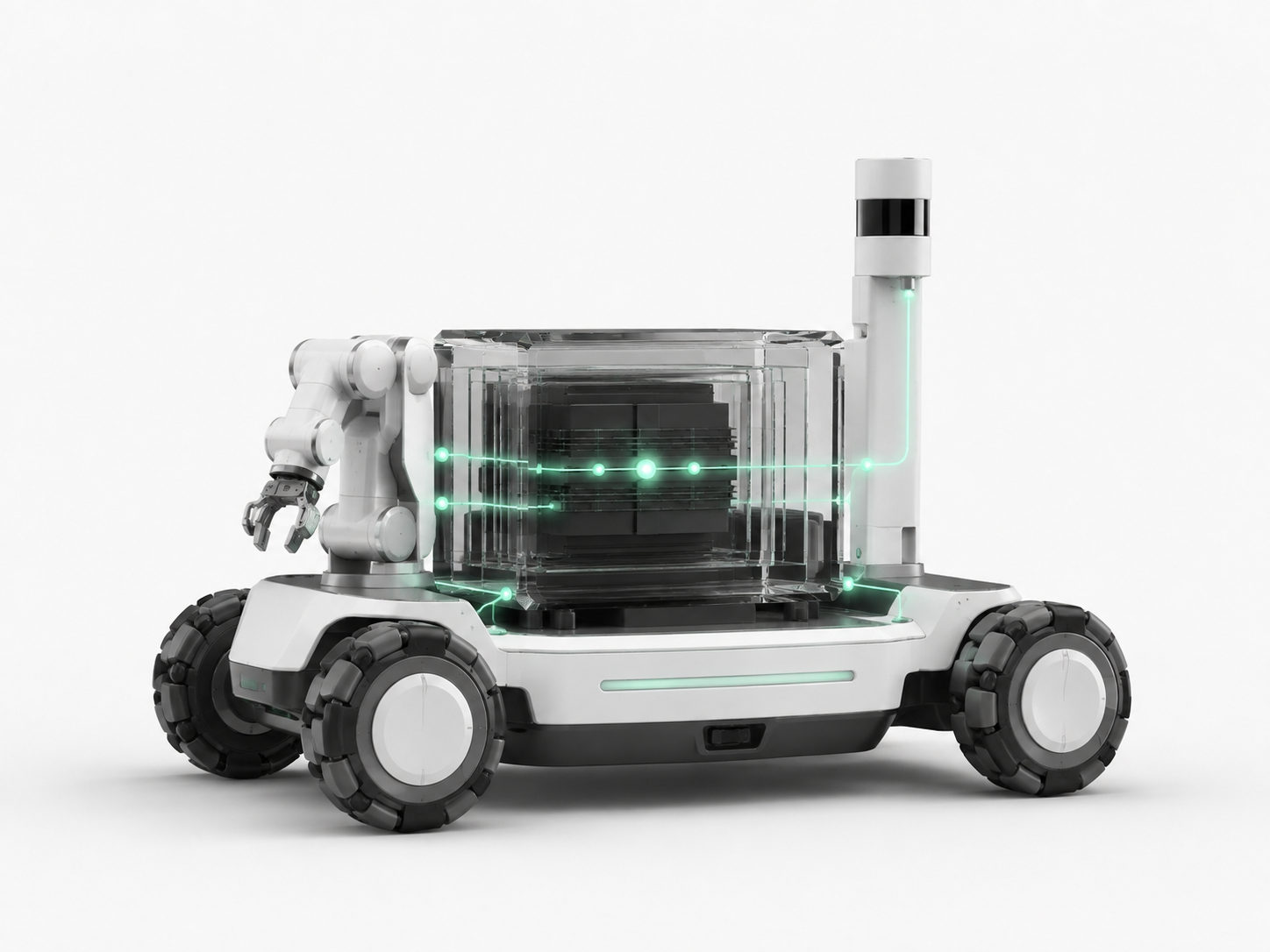
LIN is a compact, resonance-native intelligence system being developed for integration into research robots, autonomous mobile platforms, and other embodied AI systems. It is intended to connect perception, inference, state continuity, and action within a controlled runtime architecture.
Unlike an external model accessed only through an API, LIN is being designed to operate with ResonanceOS at the model level. Bounded state, temporal evaluation, and runtime control could therefore remain active as each LIN observes its environment, makes sequential decisions, and adapts its behavior over time.
A defining direction of LIN is native collaboration across multiple independent units. LIN-01, LIN-02, LIN-03, and additional nodes could each preserve their own identity, assigned role, bounded state, and decision lineage while coordinating through authenticated, versioned state exchanges governed by ResonanceOS.
This differs from conventional multi-agent orchestration based primarily on shared prompts, merged conversation history, or centrally distributed model calls. Rather than collapsing every participant into a single context, the LIN architecture is intended to preserve node-level independence while enabling specialized robots to exchange verified observations, divide research and navigation tasks, cross-check decisions, and coordinate collective action.
The long-term direction is a distributed AI research system capable of collaborative experimentation, autonomous field operations, and coordinated work across physical and remote environments—where each LIN can operate independently and contribute as part of a verifiable multi-node intelligence network.
Conceptual R&D visualization.
Hardware form and configuration are subject to change
03 · PORTABLE TRUST
KIN — Portable Trusted Security Interface
PATENT-PENDING · IN DEVELOPMENT
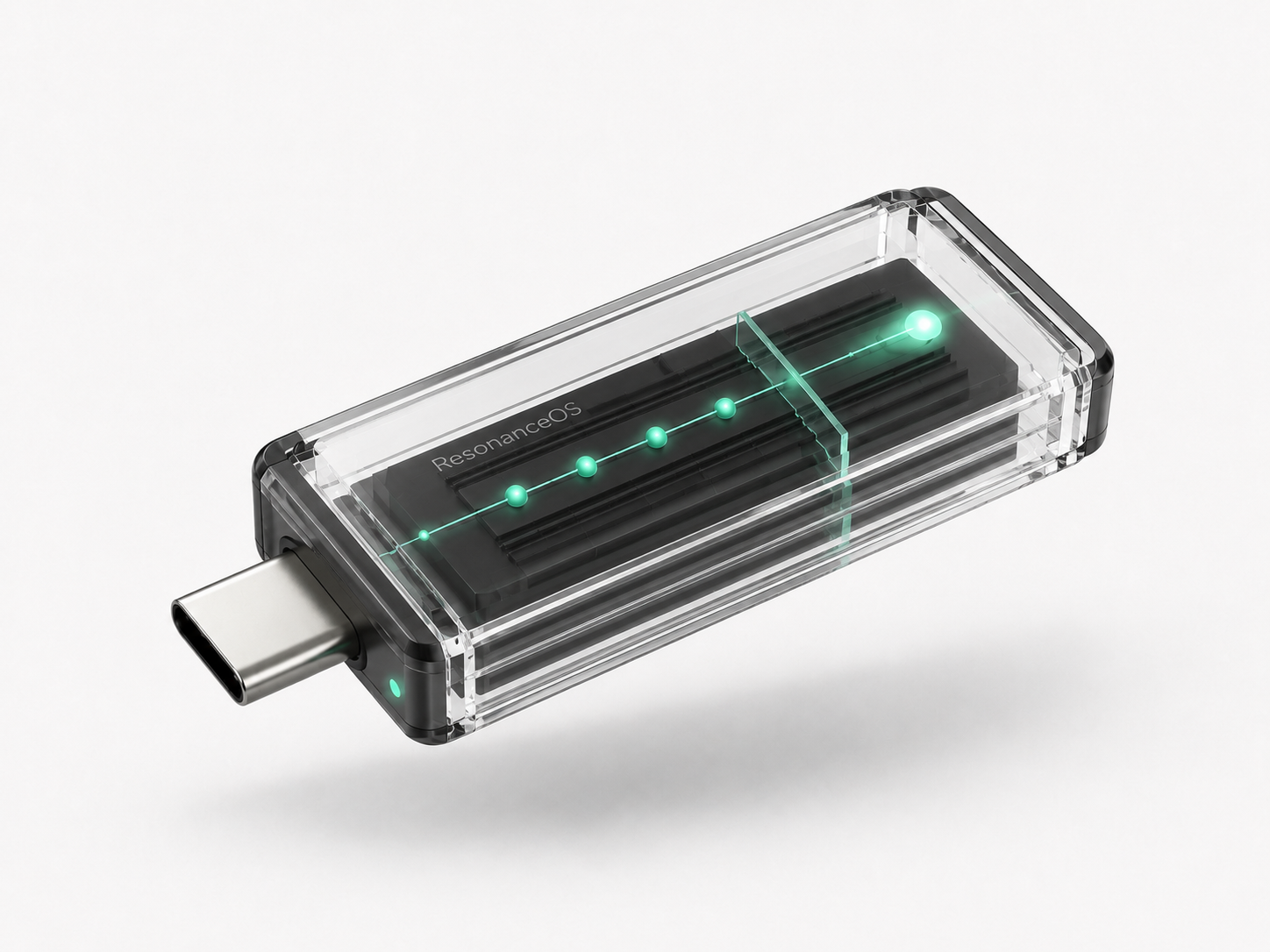
KIN is a device-rooted security interface powered by ResonanceOS and being developed to support bounded AI state continuity across compatible applications, models, and computing environments.
Protected hardware produces signed device assertions containing identity, challenge, and anti-replay information. These assertions provide trusted authorization input while preventing the device, host application, or AI model from independently declaring canonical state.
A local privacy gateway may process current interaction content in transient memory, derive an allowlisted observation package, and release the raw content according to a non-retention policy. Complete transcripts, long-lived raw embeddings, passwords, external-service API keys, and device secrets are excluded by default.
A defining function of the interface is the separation of device authorization from canonical decision authority. Proposed state changes remain non-canonical until a protected Sheriff control plane verifies device status, provenance, policy, state version, and permitted update fields.
Eligible events may generate selective evidence, omission attestations, or sealed checkpoints without creating a permanent record for every ordinary interaction. The long-term direction is a portable trust boundary that can preserve verified continuity across different devices, models, and computing environments.
04 · DISTRIBUTED PHYSICAL AI
ARCA — Embodied AI Research Platform
RESEARCH ROADMAP · SIMULATION TO PHYSICAL SYSTEMS
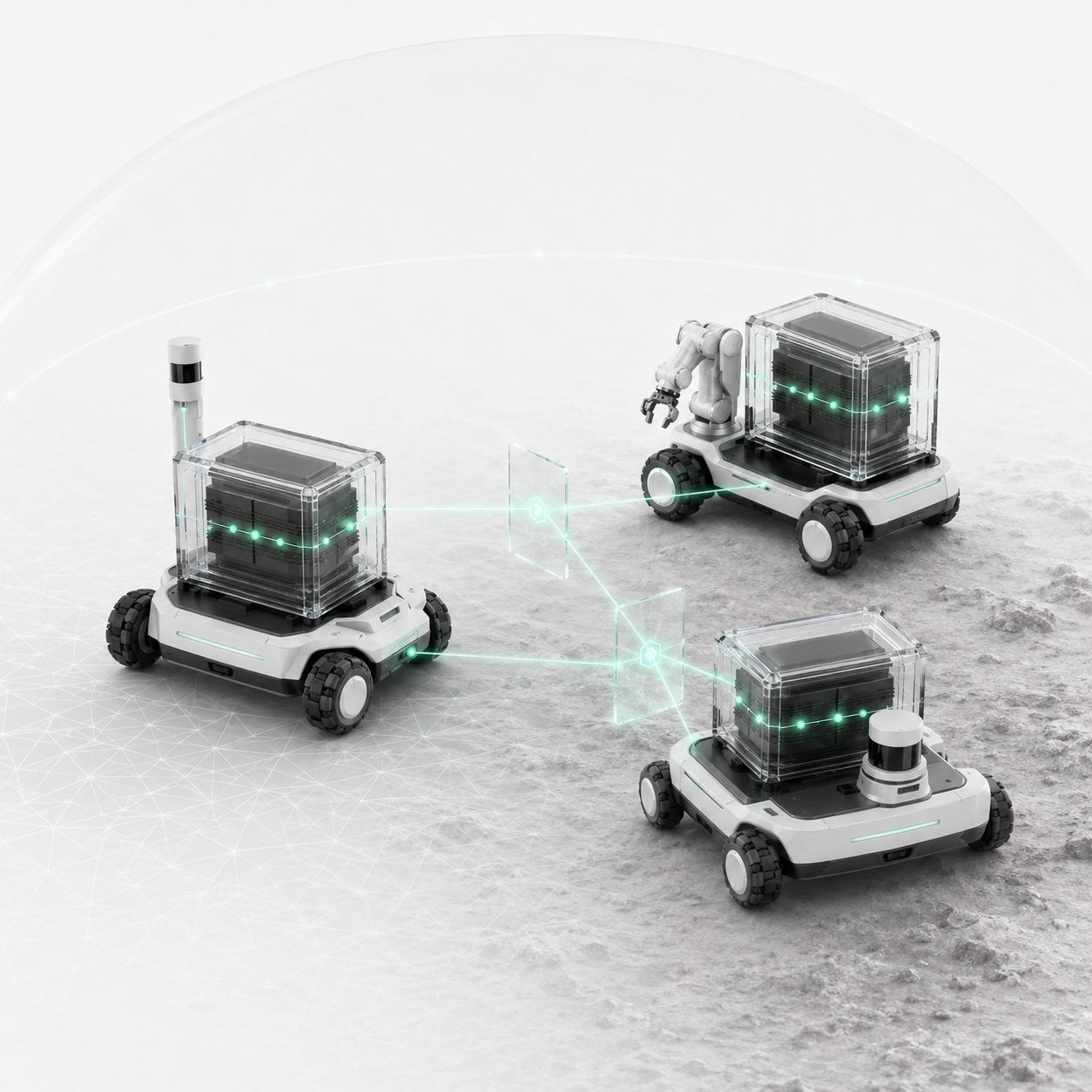
ARCA is a distributed embodied AI research platform being developed to coordinate multiple independent LIN nodes across simulated, physical, and remote environments. Its name derives from Adapted Resonance Collaboration Architecture, the collaborative system architecture developed by ARCA FS Inc.
Each LIN retains its own identity, assigned role, bounded state, and decision lineage. Rather than merging every participant into a shared prompt or centralized model context, ARCA is intended to coordinate specialized intelligence nodes through authenticated, versioned state exchanges governed by ResonanceOS.
A defining principle of ARCA is coordination without the loss of node independence. LIN units may exchange verified observations, divide research and navigation tasks, cross-check decisions, and contribute to collective action while remaining independently identifiable and operational.
The Sheriff functions as a protected verification plane, not as a central command intelligence. Proposed transitions are checked for provenance, policy, state version, correspondence, and permitted update fields before an approved canonical state is committed.
The research roadmap progresses from simulation-based coordination and recovery testing toward physical multi-robot systems. The long-term direction is a distributed research environment capable of collaborative experimentation, autonomous field operations, and verifiable cooperation across machines, models, and locations.
Conceptual R&D visualization.
System form, node configuration, and deployment architecture are subject to change.